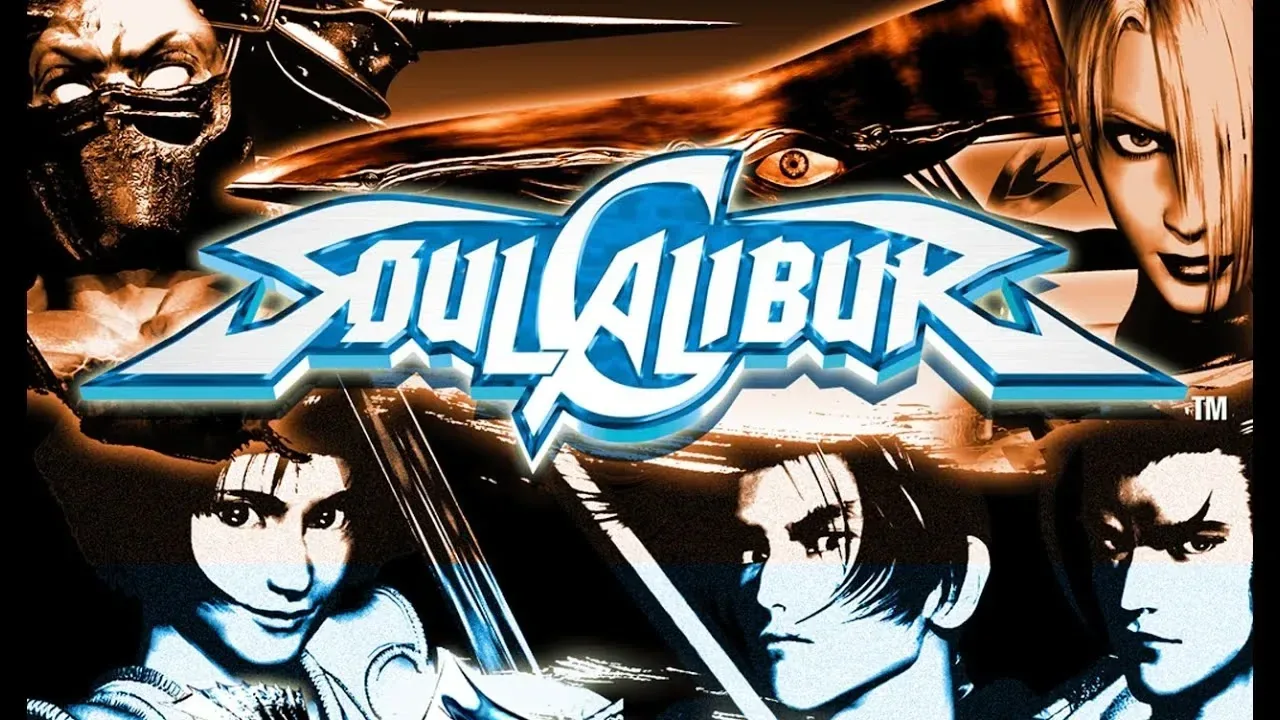
Soul Calibur on the SEGA Dreamcast is a weapon-based fighting game released by Namco in 1999. Project Soul handled the port from the original arcade version, and the result became one of the most celebrated launch window titles for the console. The game centers on a global cast of warriors hunting Soul Edge, a cursed sword of legend, while each fighter wields a unique weapon ranging from katanas and rapiers to nunchaku and giant axes. What sets this title apart is the eight-way run system, which lets players move freely around the stage in any direction. This added a fresh layer of depth to fighting games at the time, since most rivals stuck to strict 2D planes. The Dreamcast version pushed the original arcade visuals further with sharper textures, smoother animation, and higher resolution output. Critics often pointed to it as proof that home hardware could exceed the arcade, and the title quickly became a benchmark for what fighting games on sixth generation consoles could achieve in both presentation and combat design.
Updated: Jun 22, 2026
Screenshots
422 MB · Dreamcast ROMs
External mirror link — Roms Portal hosts no ROM files. Always verify a file's checksum against the known-good hash before use.
Specifications
| Platform | Dreamcast ROMs |
|---|---|
| Genre | Fighting |
| File Size | 422 MB |
| Release Year | 1999 |
| Developer | Project Soul |
| Updated | Jun 22, 2026 |
Overview
Soul Calibur on the SEGA Dreamcast is a weapon-based fighting game released by Namco in 1999. Project Soul handled the port from the original arcade version, and the result became one of the most celebrated launch window titles for the console. The game centers on a global cast of warriors hunting Soul Edge, a cursed sword of legend, while each fighter wields a unique weapon ranging from katanas and rapiers to nunchaku and giant axes. What sets this title apart is the eight-way run system, which lets players move freely around the stage in any direction. This added a fresh layer of depth to fighting games at the time, since most rivals stuck to strict 2D planes. The Dreamcast version pushed the original arcade visuals further with sharper textures, smoother animation, and higher resolution output. Critics often pointed to it as proof that home hardware could exceed the arcade, and the title quickly became a benchmark for what fighting games on sixth generation consoles could achieve in both presentation and combat design.
The game packs a wide range of modes that keep players busy long after the initial story runs end. Arcade, Versus, Time Attack, Survival, and Team Battle cover the standard fighting game options, while the Mission Battle mode offers dozens of stages with special rules and rewards. Players collect points to buy art galleries, character profiles, and alternate costumes, which gives the single player loop strong replay value. The roster includes ten starting fighters plus hidden characters such as Edge Master, Inferno, and a young version of Sophitia. Stages span ancient ruins, port cities, and mystical temples, each with ring outs that punish reckless play. Combat rewards both skill and creativity, since blocks, sidesteps, throws, and counters all matter against a strong opponent. Two player matches remain the heart of the experience, and tight controls make local battles feel fair and exciting. Soul Calibur on Dreamcast stands as a high mark for the fighting genre and still holds up beautifully today for fans of classic combat.